Professional Tile Work Mississauga
Seeking professional Mississauga tile contractor experts? Work with a local specialist who comprehends permit requirements, association rules, and climate effects. Make sure you get industry standard adherence, moisture mitigation, quality substrate installation, and movement joints. Look for comprehensive project breakdowns, certified bonding materials, waterproofing in wet zones, and tidy work areas. Confirm Ontario licenses, WSIB, insurance coverage, and protection agreements. Compare apples‑to‑apples bids and tie payments to milestones. You'll discover ways to choose products, designs, and timelines that satisfy inspection standards.
Key Takeaways
- Regional specialists knowledgeable in local regulations, homeowner association requirements, municipal approvals, and Greater Toronto Area climate conditions influences construction materials and freeze-thaw cycles.
- We hold provincial licensing, WSIB protection, complete liability insurance, and verified references with on-site quality assessments.
- Comprehensive line-item proposals meeting industry standards, including substrate preparation, waterproofing systems, expansion joints, and warranty details.
- Proven quality assurance includes moisture evaluation, flatness and deflection assessment, anti-fracture membrane and uncoupling solutions, and regulation-adherent moisture barriers for water-exposed zones.
- Clear project timeline with staged payment options, including competitive quotes, dust mitigation protocols, and documented post-installation care.
Why Choose Local Tile Specialists in Mississauga
Remove confusion by hiring local tile professionals who are familiar with Mississauga's building regulations, permit requirements, and climate effects on surfaces. You get code-compliant installations, precise moisture management, and appropriate underlayment options for temperature fluctuations. Local experts utilize area experience to source approved materials, coordinate inspections, and work with municipal inspectors. They understand slab flatness tolerances, expansion joints, and anti-fracture membranes designed for GTA specifications.
You get the advantage of a established neighborhood reputation. You can review nearby references, inspect in-person workmanship, and verify warranty responsiveness. Local contractors emphasize clean site practices, dust control, and safe access in city environments. They offer transparent costs, synchronize timelines with condo and HOA rules, and record scope, base preparation, and application materials. Such thoroughness safeguards your investment and ensures durable, up-to-code results.
Our Services: From Backsplashes to Feature Walls
Leveraging local code knowledge working in your favor, you can select targeted tile services that fit your space and performance requirements. For kitchen backsplashes, you obtain clean substrate prep, precise layout, precise joints, and grout sealing that simplifies maintenance. In bathrooms, we set up code-compliant waterproofing, properly sloped pans, humidity regulation, and expansion joints, then finish with green adhesives and low-VOC grouts. On floors, we evaluate deflection, place crack-isolation membranes or uncoupling systems, and set tiles with exact trowel patterns for optimal durability and levelness.
We specialize in constructing feature walls that meet safety standards, mounting criteria, and structural demands, while incorporating niches and lighting cutouts with meticulous tolerances. You can expect comprehensive outlines, timeline certainty, and documented warranties, ensuring your tiled surfaces look stunning and deliver results for years to come.
Choosing the Perfect Tile Materials for Your Area
While aesthetics are important, you should choose tile by matching material properties to intended use, traffic load, and moisture conditions. For wet zones, specify porcelain with low water absorption (≤0.5%) and slip-resistant coefficients per ANSI A326.3. For high-traffic floors, opt for PEI 4-5 wear ratings and rectified edges for tight grout joints. Natural stone requires adequate sealant application and deflection checks (L/720 for stone assemblies). For kitchen applications, select stain-resistant glazed porcelain; for shower installations, ensure waterproofing with ANSI A118.10 membranes.
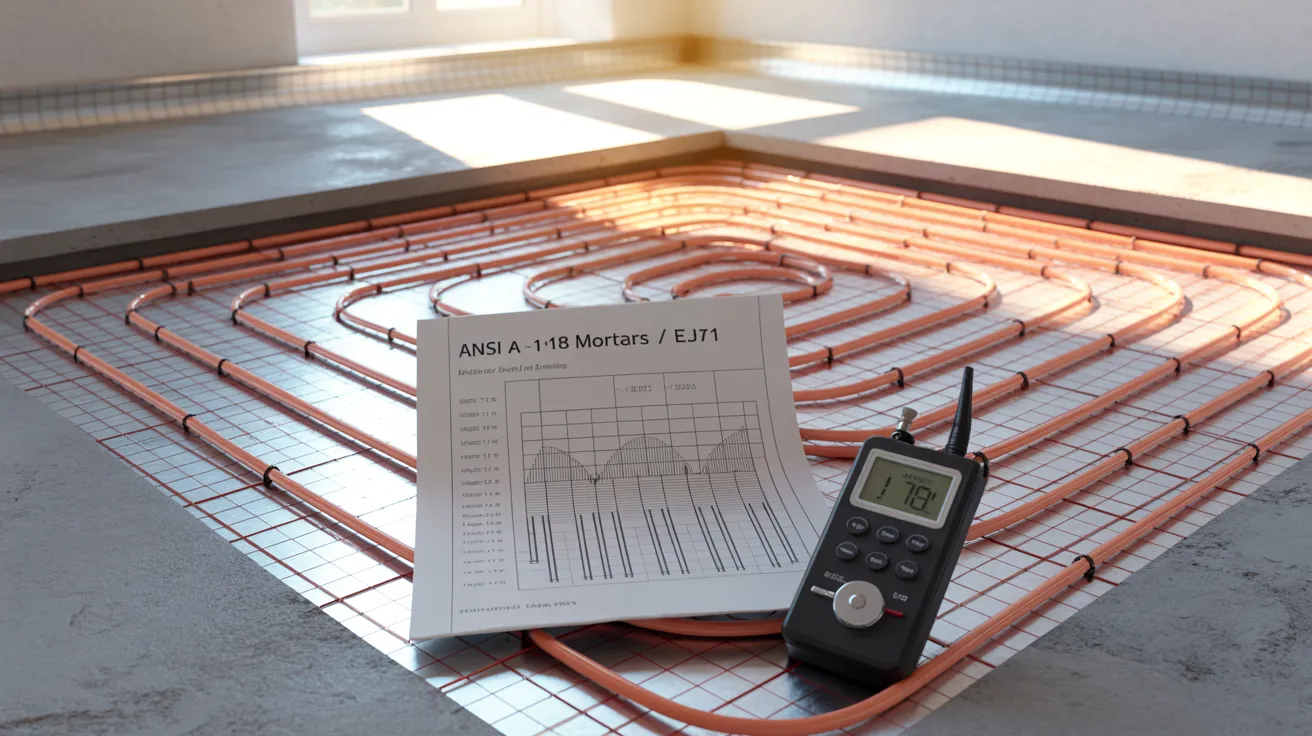
For sustainable flooring choices, explore environmentally conscious ceramics with recycled content and environmentally safe adhesives. When installing heated flooring systems, verify your materials are rated for thermal flooring, install uncoupling membranes, and follow proper thermal sensor positioning specifications. It's essential to match your grout type and joint width with expansion joint requirements according to TCNA EJ171.
Design Options and Customization Guide
You'll get expert advice on choosing the right materials that aligns with usage classifications, safety requirements, and maintenance goals. We'll propose design layouts and accent placements that manage visual flow, minimize waste, and satisfy expansion joint here criteria. Together, we'll finalize a design plan that combines design aesthetics, durability, and regulatory requirements.
Choosing Materials and Finishes
Prior to picking tile, make sure to determine the room's functional demands and design intent, then match finishes and materials to these criteria. For wet environments, select porcelain with low water absorption and a DCOF ≥ 0.42 for anti-slip properties. For low-impact vertical surfaces, ceramic tile works well; for heavy-use zones, look into heavy-duty options like quarry or sintered stone. Be sure to confirm the frost rating for outdoor use and chemical resistance for pools and kitchen spaces.
Specify finish by intended use: matte finish where traction is needed, honed finish to minimize glare, polished surfaces limited to dry interior locations. Coordinate grout shades for aesthetic continuity and joint visibility. Select eco-friendly sealing products and low-emission setting compounds to achieve indoor air quality standards. Verify thickness specifications, deflection limits, and precision-cut edges for minimal gaps. Verify products meet industry standards and regional requirements.
Layout Patterns and Design Accents
After confirming tile selections, develop a layout arrangement that complements room geometry, traffic patterns, and upkeep needs. Diagonal, square-grid, and running-bond configurations affect aesthetic appeal, traction, and grout maintenance requirements. Use a central reference line and dry-lay technique to confirm symmetry, trim positions, and doorway gaps. Align grout joints to prevent slivers at perimeters; ensure consistent joint widths as specified in ANSI A108 and TCNA standards.
Incorporate herringbone patterns to mark central points or interface sections without impeding egress paths. Design contrast boundaries to highlight food prep, washing, or heating zones, ensuring movement joints at perimeters and every 20-25 feet in interiors. Calibrate tile grade and hue before installation. Coordinate thresholds with finished floor heights, incorporate schluter profiles for neat terminations, and incline wet zones to compliant drains.
Quality Standards and Installation Process
You'll see us start with rigorous pre-installation site evaluation, including substrate assessment, moisture level verification, surface leveling, and crack mitigation as specified by TCNA and manufacturer guidelines. We then set layout control lines, keep uniform grout joints, and limit lippage within ANSI A108 standards utilizing calibrated spacers and leveling systems. Throughout the process, we track products, cure times, and bond strength tests to guarantee your project satisfies code and warranty requirements.
Site Preparation Before Installation
Setting up for success starts with thorough site preparation that meets code and manufacturer specifications. You begin with a detailed substrate analysis: confirm structural load capacity, flatness tolerances (usually 1/8" in 10'), and deflection limits as specified by TCNA/ANSI. Locate and identify cracks, hollow spots, contaminants, and incompatible coatings. Subsequently, carry out moisture testing-ASTM F2170 or F1869 as applicable-and apply moisture mitigation when readings go beyond the tile system's limits. Address plane and level utilizing appropriate patching compounds, then abrade, clean, and vacuum to create a proper surface.
You establish movement joints following EJ171, manage passageways and thresholds, and ensure heat-mat or radiant systems meet specified depth and listing criteria. In conclusion, stage materials, check batch uniformity, acclimate as required, and confirm environmental parameters-temperature, ventilation, and humidity-fall within required specifications.
Quality Tiling Standards
Execute the install to TCNA, ANSI A108/A118/A136, and manufacturer requirements, documenting all stages for documentation. You verify substrate flatness within precision tolerances, correct plane, and necessary slope to drain. Pick mortars and membranes according to exposure, deflection, and bond requirements, then spread and trowel ridges in one direction to obtain required coverage. Place tiles with minimal lippage, verify joint positioning, and preserve movement joints following EJ171.
You enforce grout specification depending on width of joints, usage levels, and chemical conditions, then mix, place, and tool within allowable temperature and humidity ranges. You remove excess material while protecting surfaces and ensure proper curing following manufacturer guidelines. You perform adhesion testing, coverage verification, and layout evaluation, producing photos and reports that verify specification compliance and ensure durability.
Durability, Maintenance, and Long-Term Value
While aesthetics drive decisions, longevity, upkeep, and total cost determine true worth. You require systems that can handle traffic, moisture, and thermal movement without premature failure. Select tiles with demonstrated durability and a PEI or DCOF value matching the intended use. Porcelain is our choice for high-use areas and straight edges where narrow joints are needed. Prioritize grout longevity with enhanced or epoxy-based grout, suited to environmental conditions and maintenance plans. Install ANSI A118-certified mortars and control joints as specified by TCNA EJ171 to minimize fractures. Protect natural stone according to manufacturer guidelines; confirm cleaner compatibility. Arrange routine examination of sealants, changeovers, and caulked joints. With correct base preparation, water barriers, and air circulation, you will decrease service calls, increase durability, and preserve investment worth.
Project Timelines, Budgeting, and Quotes
Before beginning any work, obtain a thorough written specification that aligns scope, budget, and schedule. Clearly specify materials, labor, substrate preparation, moisture barriers, and finishing details. Request square footage calculations, tile placement plans, grout type requirements, control joint positioning, and industry specifications for water-exposed zones. Clearly define tearout processes, waste disposal, and dust management protocols.
Establish a reasonable budget with a ten to fifteen percent budget contingency for unexpected surface issues or building regulation upgrades. Ask for unit rates for additional options so modifications are clear. Check lead times for materials, waterproofing, edges, and drainage components to maintain project timing.
Define project milestones: materials acquisition, teardown, surface preparation, test fitting, implementation, curing periods, and sealant application. Incorporate permit timelines where applicable and note inspections that can pause work. Lock in payment draws tied to milestones, not dates.
How to Choose and Hire the Perfect Professional
Although an offer looks promising, diligently vet the contractor with the same detailed approach you apply to specs and codes. Start the verification process by verifying licensing status through Ontario's regulatory bodies and WSIB coverage. Remember to confirm liability insurance and request a written scope following TTMAC standards, detailing substrate preperation and waterproofing requirements.
Create detailed interview questions about: who performs the work, spacing specifications, flexible joints, grout selection, setting durations, dust management, and site protection. Request a work schedule with progress points and change-order protocol. Request a warranty in writing.
Complete thorough reference checks with previous clients and suppliers; verify on-time delivery, workmanship, and issue management. Examine a active jobsite for protective systems and tidiness. Evaluate bids side-by-side on materials, preparation, and final touches. Choose documented competence over cheapest quote.
Popular Questions
Do You Offer Eco-Friendly or Recycled Tile Options and Adhesives
Indeed, there are sustainable tile selections and eco-safe bonding materials. We provide sustainable materials, such as recycled ceramics, glass, and porcelain, from approved sustainable suppliers. We implement eco-safe, water-based, and GREENGUARD/LEED-verified adhesives and grouting materials. You'll receive guidance on slip resistance, VOC thresholds, and lifecycle costs. We verify EPDs and HPDs, confirm recycled content, and guarantee code-compliant installation methods. You'll reduce waste with precise measurements, eco-friendly disposal methods, and thinset recycling options.
Can You Integrate Radiant Floor Heating With Tile Installations?
Yes, we can incorporate radiant floor heating with tile installations. We assess subfloor conditions, insulation needs, and system demands, then select Electric heating solutions for targeted spaces or Hydronic heating for whole-house coverage. We follow electrical and plumbing codes, apply decoupling membranes, and adjust thin-set coverage to manufacturer specs. We check sensor placement, expansion joints, and GFCI protection. Lastly, we commission the system, log warranty details, and schedule a controlled heat-up to preserve grout and tile.
What Guarantees and Warranties Are Available for Workmanship and Materials
We provide a Lifetime warranty on specific materials backed by manufacturers and a five-year Labor assurance on our workmanship. We install in accordance with TCNA standards and local building codes, documenting substrates, mortar systems, membranes, and grout specifications. We register product warranties, deliver written warranty certificates, and perform post-install inspections. In the event of installation-related defects, we'll remedy them-fix or substitute-at no cost. Not covered under warranty: abuse, structural movement, flooding, or unapproved maintenance.
How Are Unexpected Structural Issues Managed During Tiling Projects
Work is paused to document all findings and brief you on project parameters, expenses, and schedules. Site stabilization is performed to contain compromised sections and arrange for structural evaluations. Building permits are managed while submitting necessary drawings and maintaining code compliance. Upon client confirmation, substrate remediation begins, damaged structural elements are restored, and appropriate moisture barriers, vapor barriers, and crack prevention systems are placed. Modifications are documented, dust control is maintained, and tiling resumes only after approval is received and structural integrity is confirmed.
Do You Have Insurance for Liability and Workers' Compensation in Ontario?
Yes, you should confirm that we have active liability coverage and workers' compensation in Ontario. We will supply insurance certificates designating you as the certificate holder, showing policy limits, copyright details, and effective dates. Our WSIB clearance demonstrates compliance and insurance standing. We comply with OHSA requirements, perform site-specific hazard assessments, and maintain PPE and safe-work procedures. Obtain updated documents before mobilization and at key milestones to verify continuous, code-compliant protection.
To Conclude
In the final analysis, you're investing in proven results, not mere assurances. The notion that "all tile contractors are equal" falls short under real-world conditions-just like grout that hasn't properly cured. When you select qualified Mississauga experts, you obtain code-compliant preparation, standard ANSI/TCNA procedures, written guarantees, and monitored schedules. Your surfaces stand up to water, shifting, and deterioration because crucial components-flex points, surface flatness, moisture barriers-are essential requirements. Require transparent pricing, sample installations, and verification steps. You don't take chances with finishes; you establish performance standards, and you verify the outcome.